The scroll is the timeline. Each chapter is a lesson paid for the hard way.
I charged $200 for a full wedding. The client cried — not from the photos.
My first paid wedding was a disaster I couldn't see coming. I showed up with one body, one lens, and the confidence of someone who'd been praised too much on Flickr.
The ceremony light was backlit. I didn't own a reflector. The reception was in a barn with Edison bulbs and I had no idea what "expose for the highlights" actually meant under pressure.
I delivered 800 photos. Forty were usable. The client called me three weeks later and asked — quietly, generously — if this was my first wedding.
It was. I'd lied on my inquiry form. I was twenty-three and desperate and convinced talent was enough.
Yorktown, Virginia · 2013 · Shot on a borrowed Canon 5D Mk II
The Lighting Library born from that barn.
Every bad-light situation I've survived since 2013 is now a diagram in the Vault. Reception halls, window backlighting, midday sun, candles-only ceremonies. 140+ annotated lighting diagrams with exposure settings, modifier choices, and the exact mistakes I made first.
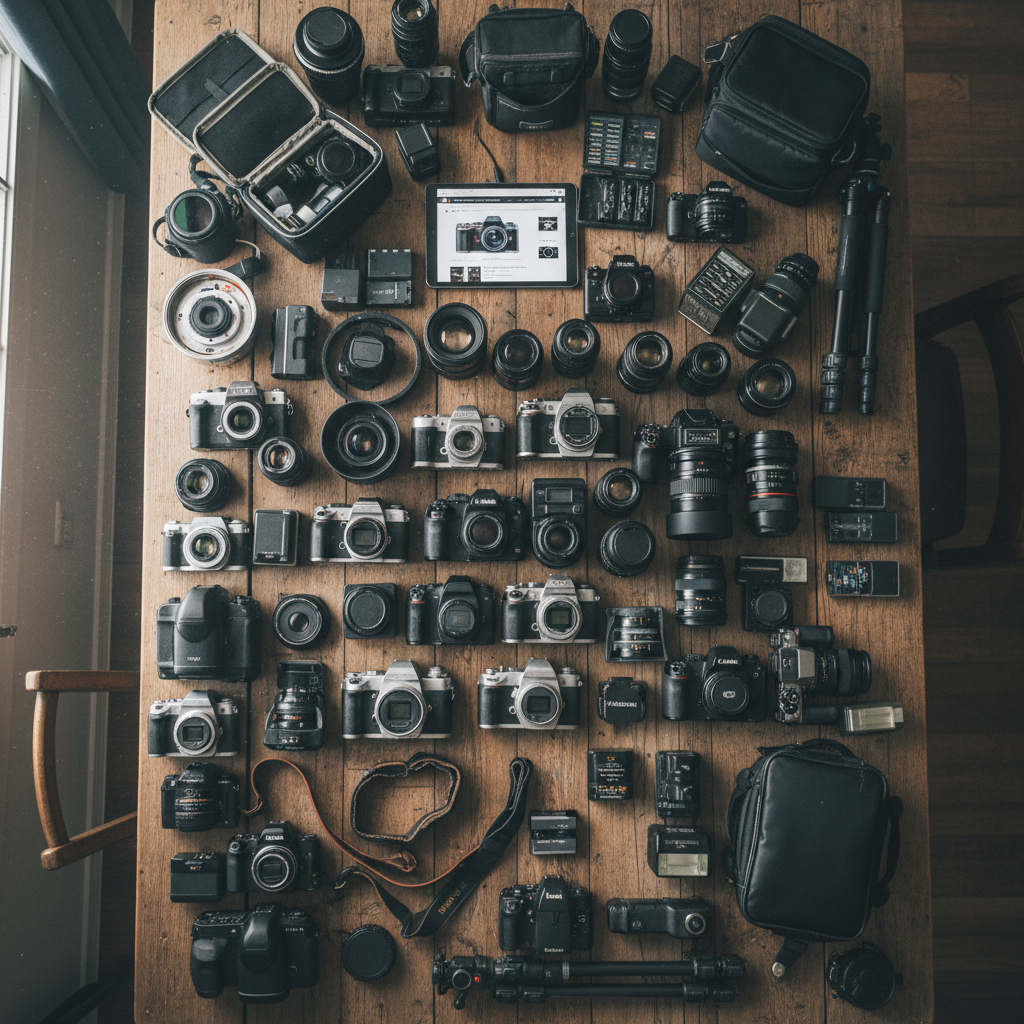
The full kit, circa 2015 · Everything I thought I needed
Honest critique threads — no gear talk allowed.
Inside the community, we have a standing rule: you cannot reference equipment in a portfolio critique. Work is evaluated on light, composition, timing, and editing decisions. Members report this as the single most uncomfortable and valuable rule in the Vault.
I spent $34,000 in three years trying to buy my way out of mediocrity.
The forums told me the 85mm f/1.2 would fix my portraits. The 85mm f/1.2 did not fix my portraits. So I bought the 135mm f/2. Then the 70-200. Then a second body "for safety."
I was $34,000 deep before I realized the photographers I was trying to emulate were shooting on the same bodies I'd started with. They'd just stopped blaming the gear.
The real cost wasn't the money. It was the two years I spent chasing equipment instead of shooting. Instead of failing. Instead of getting better.
The gear spiral is a very specific kind of loneliness — you're buying community you haven't earned yet.
A stranger looked at my rate card and asked: "Who told you this was what you were worth?"
I'd been charging $1,800 for full-day weddings for four years. I thought it was good money. I'd never done the math on what it actually cost me — per hour, including editing, travel, consultations, and the two days of recovery time my body needed after a ten-hour shoot.
The workshop was in a rented photography studio in Portland. There were nine of us. The instructor, a commercial photographer named Marcus, asked us to write our day rate on a piece of paper.
He looked at mine. He looked at me. He said: "This is a poverty wage for a skilled trade. Who told you this was what you were worth?"
Nobody had. That was the problem.
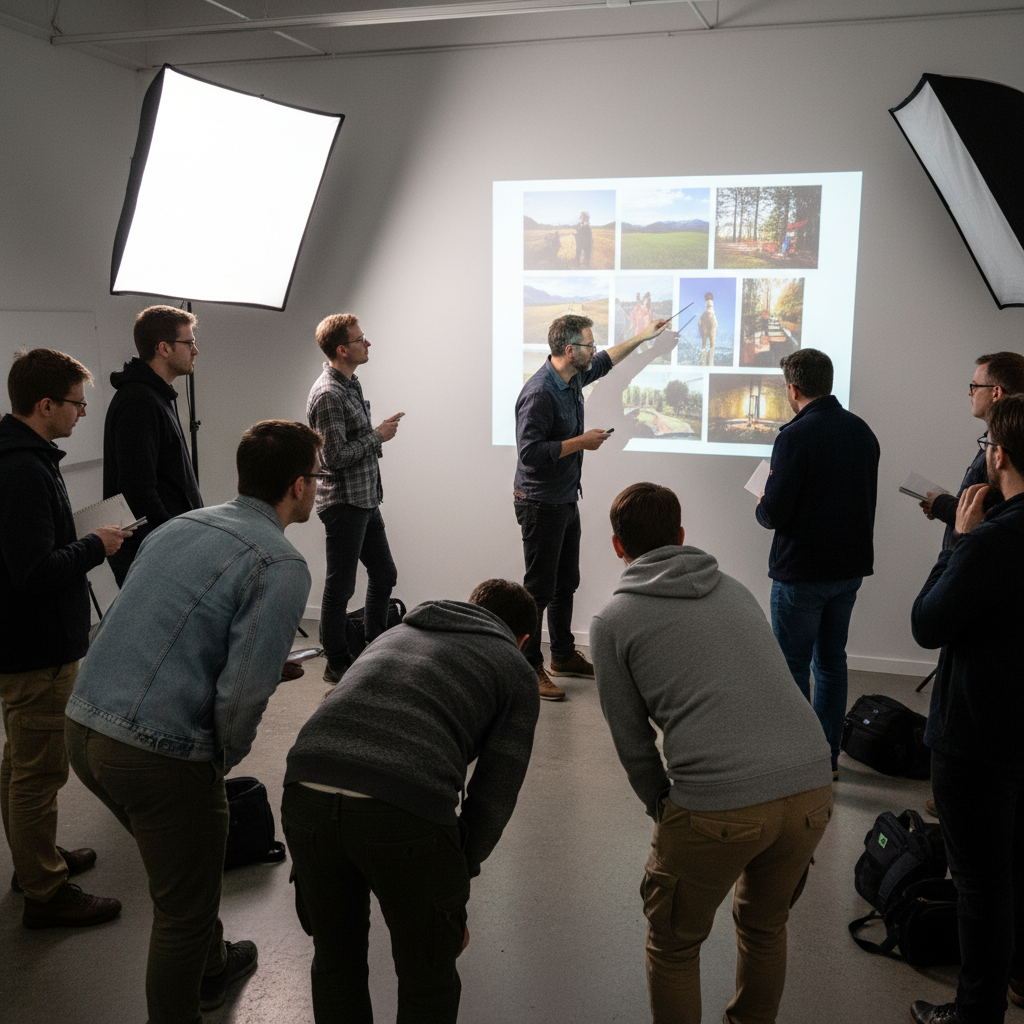
Portland, 2016 · The workshop that changed the number
A pricing calculator built on real cost-of-business math.
The Shutter pricing calculator takes your market, experience level, annual shoot target, and actual cost of business — including gear depreciation, editing hours, and consultation time — and outputs a minimum viable day rate. 847 members have used it to raise their prices. Average increase: 34%.